
Corrective Hair Color
in Austin, Texas
Specialized Color Correction by Leesa Lee
Corrective color is not a standard color appointment. It is a highly specialized, carefully planned service for hair with unwanted tones, uneven results, dark dye buildup, banding, vivid staining, compromised areas, or a complex history of previous color.
Whether you are correcting an at-home color result, transitioning away from years of dark dye, repairing an uneven blonde, or beginning a significant color transformation, Leesa approaches each correction individually. The goal is not to force the hair into an unrealistic result in one appointment. It is to make thoughtful, strategic progress while protecting the integrity of your hair and creating the strongest possible foundation for what comes next.
When Hair Color Becomes a Correction
A service may be considered corrective color when the existing hair must be removed, neutralized, balanced, rebuilt, or significantly altered before the desired result can be created.
Corrective color may be appropriate for:
Hair that has become too dark, too warm, brassy, orange, gold, muddy, or uneven
Banding or overlapping color throughout the hair
Black, brown, red, or other artificial dye buildup
Box dye or repeated at-home color
Uneven highlights, patchy blonde, or inconsistent lift
Vivid, fashion-color, henna, or mineral staining
Previously lightened or overprocessed hair
Major transformations from dark hair to blonde, silver, or gray
Hair that has undergone multiple services with different stylists
A previous correction that still requires additional refinement
Some situations that appear simple from the outside are technically complex once the hair’s history, porosity, underlying pigment, and structural condition are considered. This is why all new corrective-color clients begin with a digital consultation.
Why Corrective Color
Requires a Specialist
-
Previously colored hair does not respond like untouched hair. Artificial pigment may be layered unevenly throughout the lengths, and different sections may have been exposed to different formulas, overlapping lightener, minerals, hard water, heat, or chemical services. Even when the hair appears healthy, its internal condition may not be fully understood until the correction begins.
-
Corrective color requires far more than selecting a new shade. Depending on the starting point, the process may involve color removal, controlled lightening, targeted foiling, multiple customized formulas, replacing missing pigment, neutralizing unwanted tones, balancing porosity, and rebuilding dimension.
-
Leesa uses decades of color experience to evaluate how the hair responds in real time, determine what can be achieved safely, and adjust the plan when necessary. Some goals can be approached immediately, while others require patience and restraint to create a healthier, more refined long-term result.
The Leesa Lee DifferenceA Customized Color Plan—
Not a One-Formula Service
No two corrections are approached in exactly the same way.
Your plan will be influenced by:
Your natural color and underlying pigment
Every known layer of previous color
The depth and type of artificial dye present
Hair length, density, texture, and porosity
Existing lightened or compromised areas
The difference between your current color and desired result
How evenly the hair lifts during the appointment
What the hair can safely tolerate
Inspiration photos are helpful for communicating direction, but they are not a guarantee of what can be achieved during the first session. The final plan must be based on your actual starting point—not only the color visible in a photograph.
Color Correction Before Gray Blending:
A Real Client Example
This client came in hoping to begin a gray blending process after several years of trying to soften her grow-out, reduce warmth, and create a more polished result.
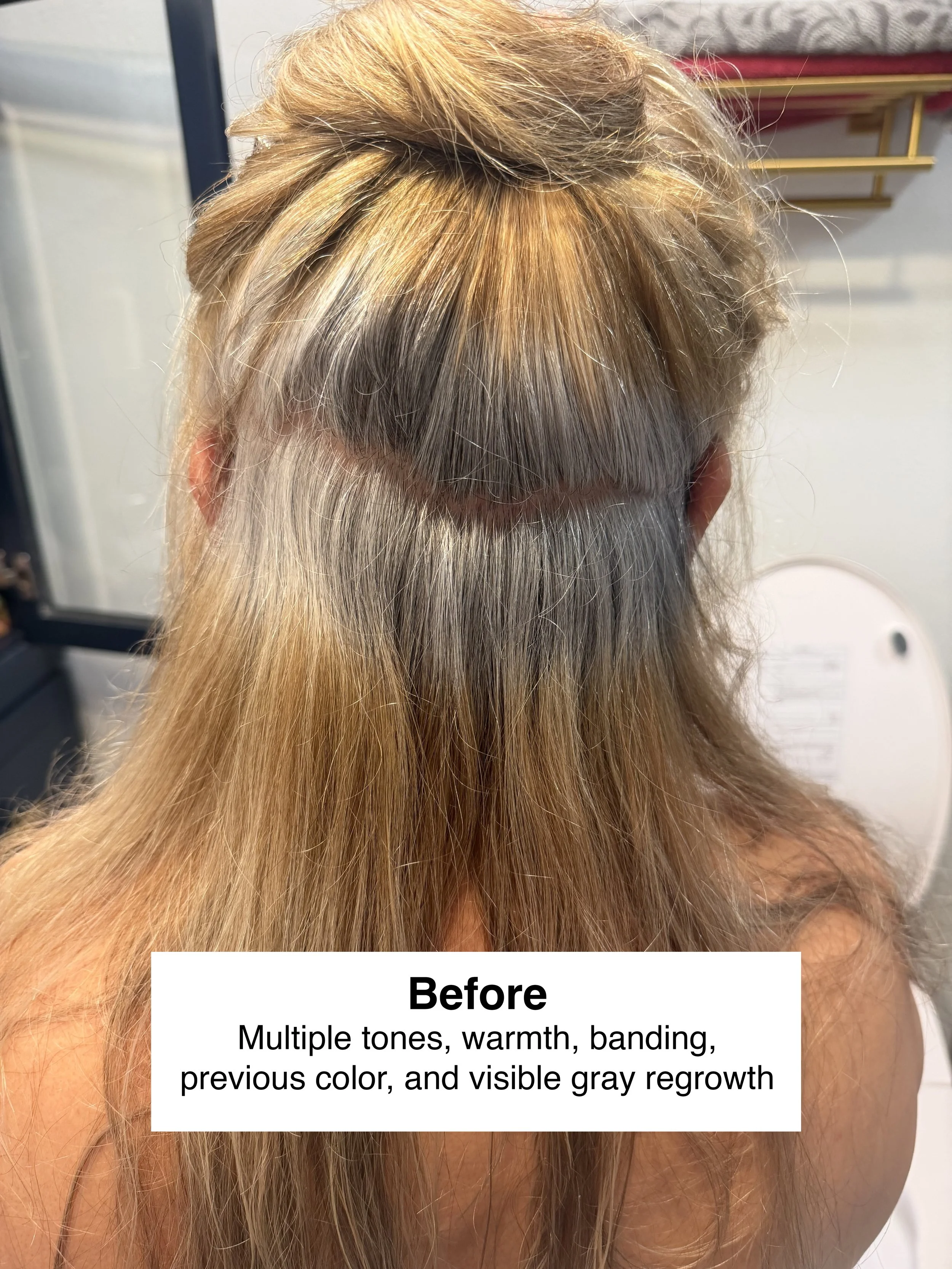
Her long-term goal was gray blending, but her starting point required corrective color first. Her hair had multiple tones throughout, including warm blonde, previous artificial color, uneven gray placement, and visible banding from past color services.
In situations like this, the first appointment is not about forcing the hair into a perfect silver result in one day. The first step is creating a better foundation so the natural gray has something softer, cooler, and more intentional to blend into.
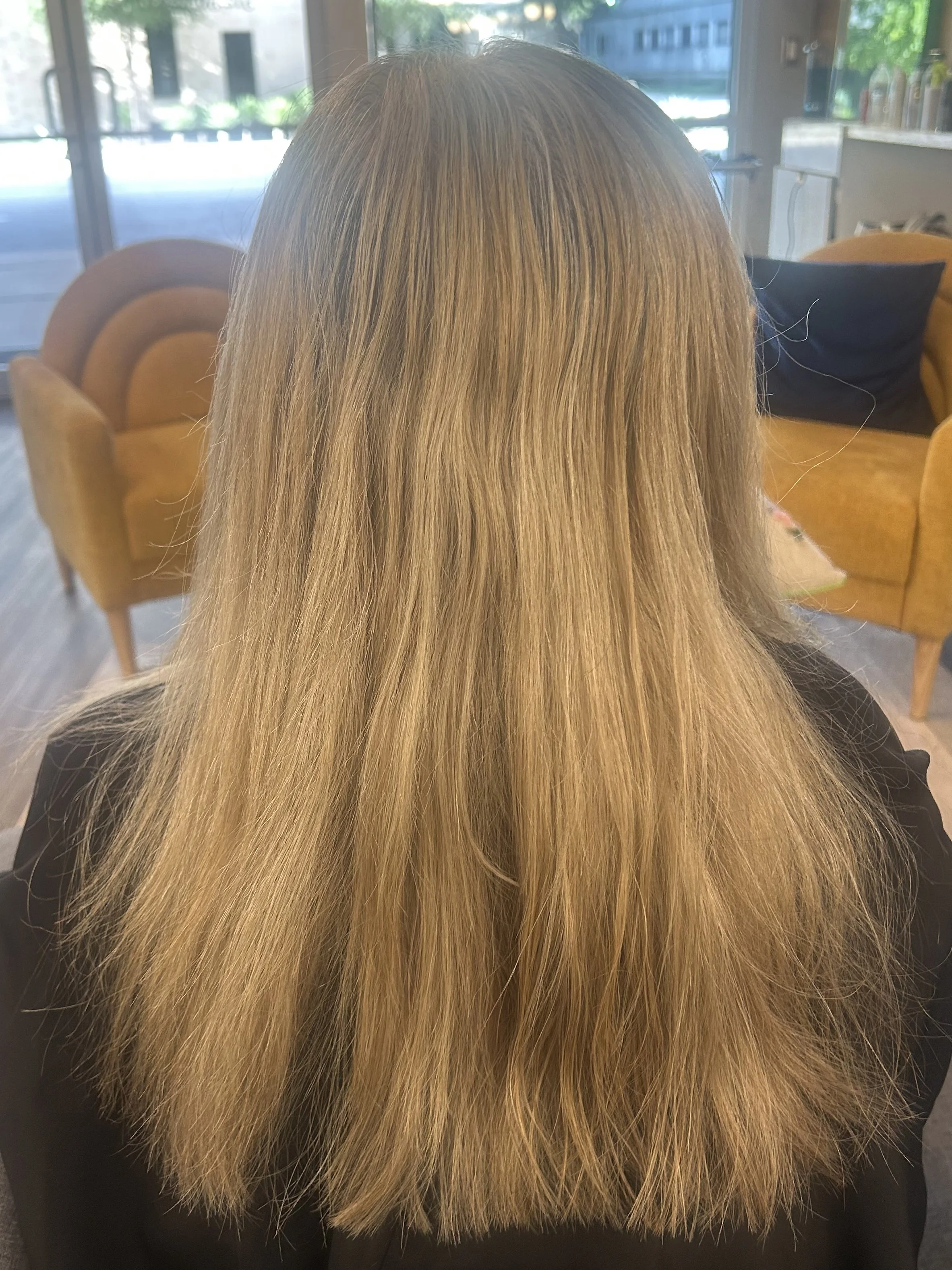
During this session, Leesa focused on softening the warmth, reducing harsh contrast, improving the overall tone, and beginning a more blended gray transition plan. The result was a cooler, more balanced color that looked more polished while still respecting the condition and history of the hair.
This is why every new color client begins with a digital consultation. Gray blending, gray transition, and corrective color often overlap, and the right first appointment depends on what is already in the hair — not just the final goal.
The Process:
From Uneven Warmth to a Softer Gray Blend
Corrective color is often the bridge between old color and a future gray transition. In this first session, the goal was not to create a final “perfect silver” result. The goal was to soften warmth, reduce banding, balance the tone, and create a more polished foundation for future gray blending.
Before: Back View
Multiple tones, warmth, banding, old color, and natural gray regrowth before the corrective color process began.
After: Back View
A softer, cooler, more balanced foundation with reduced warmth and a more intentional gray blend.
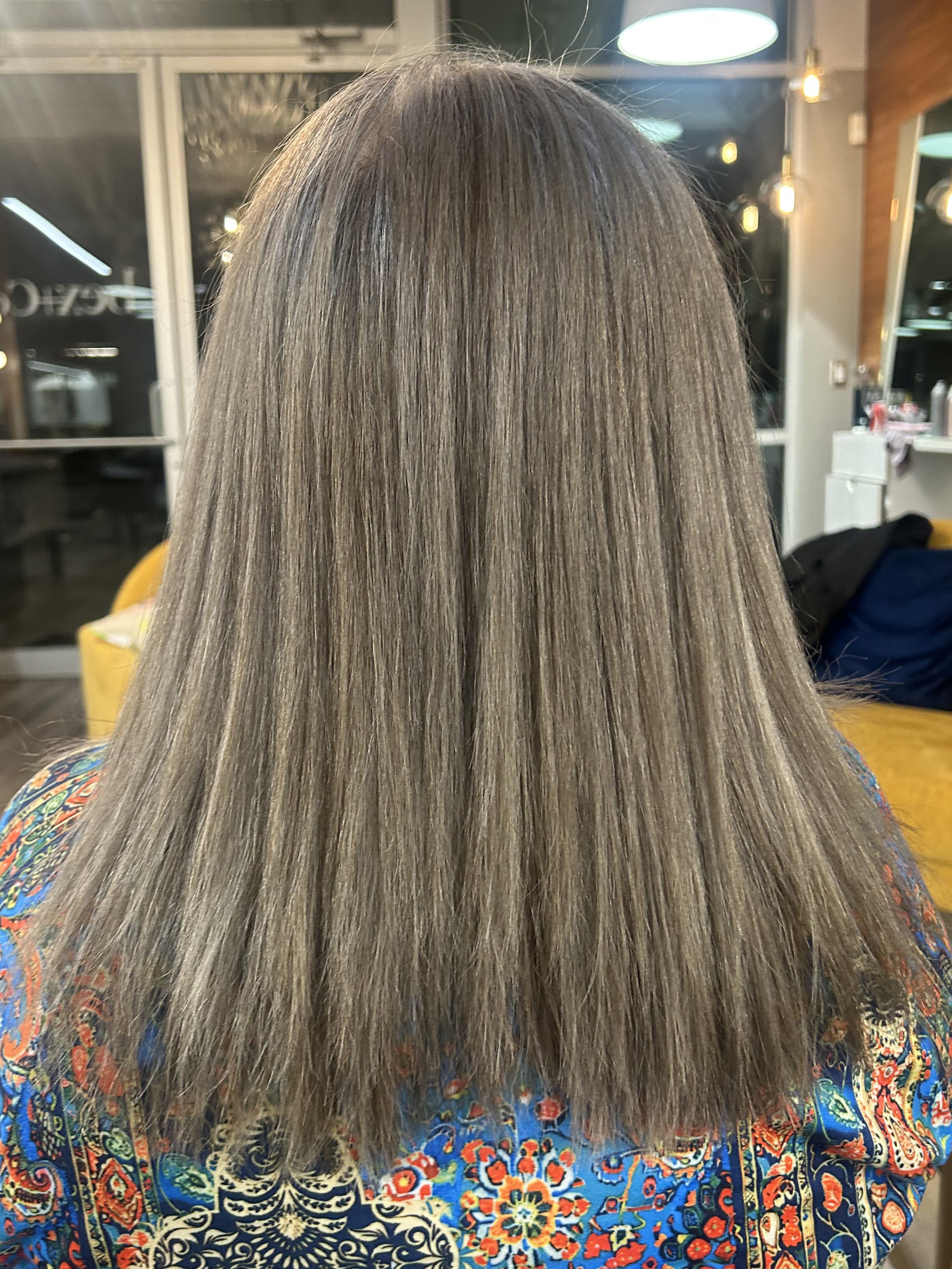
Before: Side View
Warm blonde ends, uneven tone, and previous color created a less seamless grow-out from the side profile.
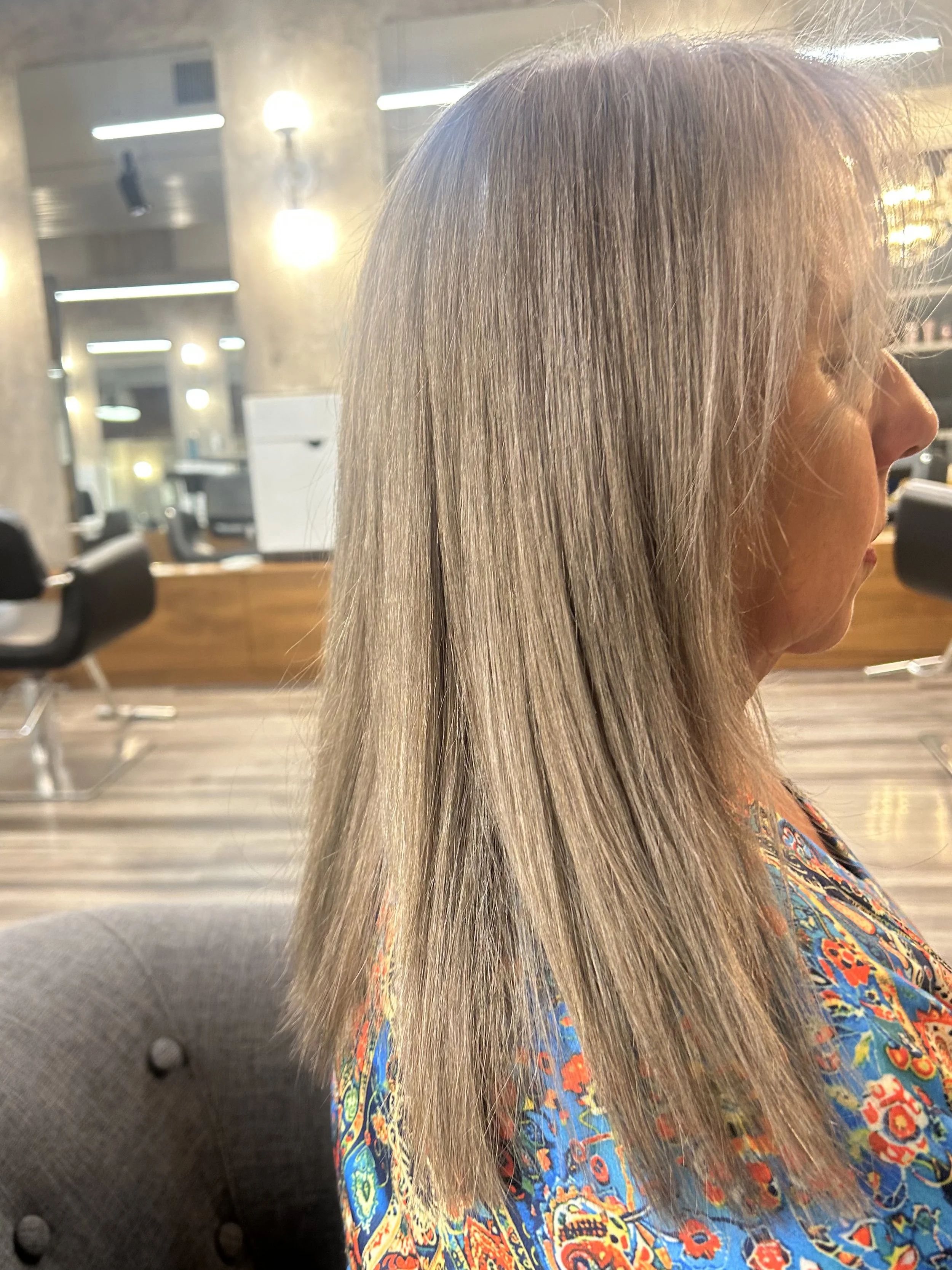
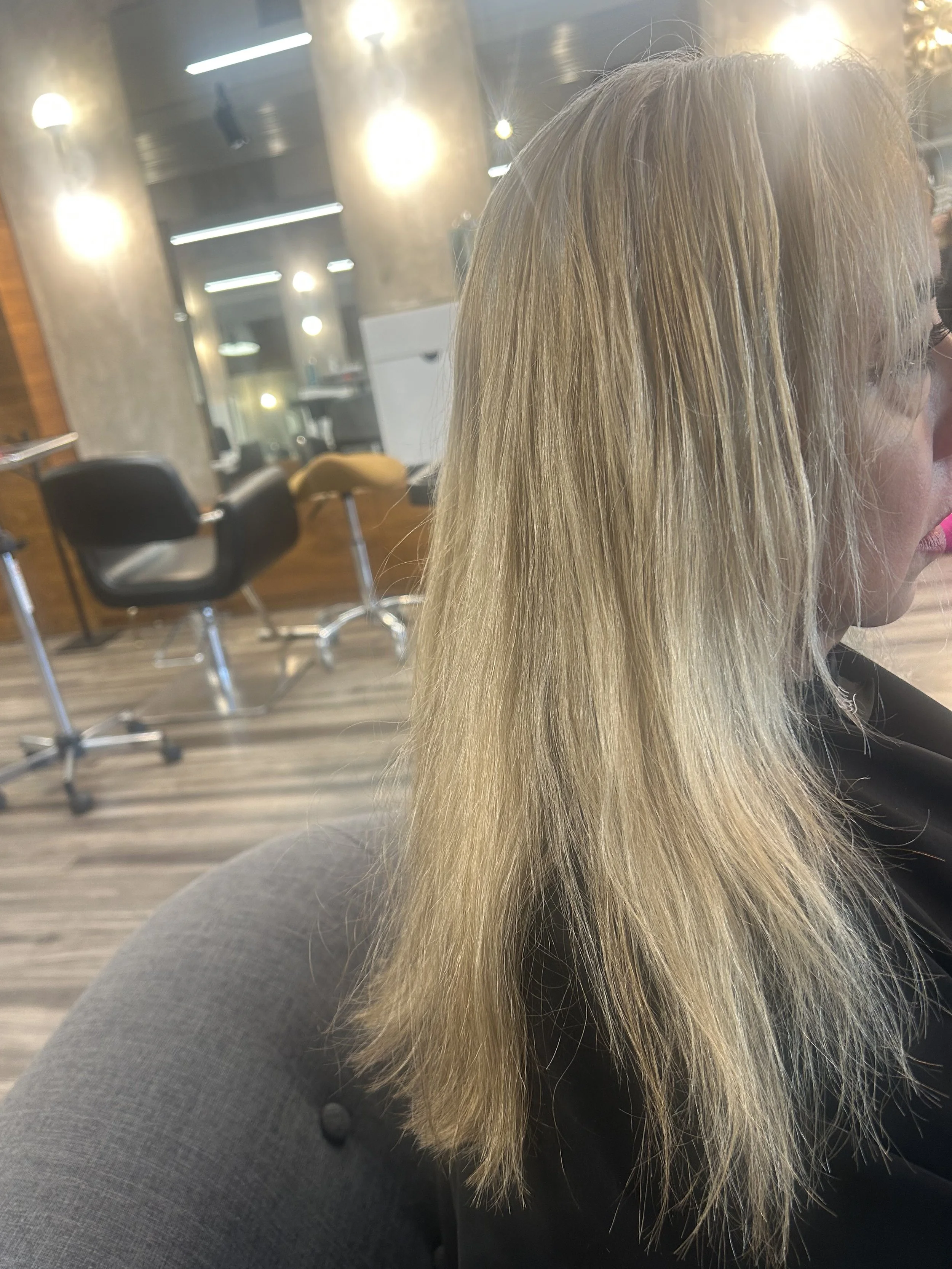
After: Side View
A more polished side profile with cooler dimension, softened contrast, and a smoother transition into the natural gray.
The Transformation: Softer, Cooler, More Refined
This first corrective color session took 6.5 hours and was not the final destination. Corrective color takes time because the hair must be approached in sections based on what is already present: previous color, warmth, banding, natural gray, porosity, density, and overall condition.
The goal of this appointment was to soften the warmth, reduce harsh contrast, improve the overall tone, and create a better foundation for future gray blending. For many clients, gray blending and gray transition work are built over more than one appointment.
What to Expect During Your First Corrective Color Appointment
Your first corrective session is typically the most investigative and foundational appointment.
Once Leesa begins working directly with your hair, she can more accurately evaluate how the existing color lifts, where pigment is concentrated, how porous the hair is, and whether different areas require separate treatment. The original plan may be refined during the appointment based on these findings.
As much progress as possible will be made within the time reserved, but hair integrity will always take priority over completing the entire transformation in one visit.
A first session may focus on:
Removing or softening artificial pigment
Breaking through dark color buildup
Correcting uneven bands
Creating a cleaner and more even canvas
Neutralizing the most disruptive unwanted tones
Improving balance and dimension
Preparing the hair for a future blonde, silver, gray, brunette, or red result
Some clients will leave close to their ultimate goal. Others will leave with a significantly improved transitional result and a clear plan for the next stage.
Hair Integrity Comes Before Speed
Corrective color can place significant demands on previously processed hair. For that reason, the healthiest decision is not always the fastest one.
If the hair begins to show that it cannot safely tolerate the original plan, Leesa may adjust the formula, reduce the amount of lightening, preserve certain areas, recommend a cut, or stop before the full appointment time has been completed. This protects the hair from unnecessary breakage and gives you a stronger foundation for future progress.
The objective is not simply to make the hair lighter or different. It is to create a result that remains wearable, intentional, and maintainable after you leave the salon.
Corrective Color Is Often a Process
The greater the distance between your current color and your desired result, the more likely the transformation will require multiple sessions.
This is especially common when working with:
Years of dark permanent color
Black or dark brown box dye
Red or vivid pigment
Henna or unknown at-home products
Significant banding
Fragile, porous, or repeatedly lightened hair
A dramatic transition from dark hair to blonde, silver, or gray
Hair that has already undergone one or more unsuccessful corrections
Warm, brassy, copper, gold, or uneven transitional tones may appear as artificial color is lifted away. These stages are not necessarily signs that something has gone wrong. They can be part of the controlled process of moving through the underlying pigment safely.
Leesa will explain what was accomplished during your session, what the hair revealed, and what she recommends before additional corrective work is scheduled.
Who Is a Strong Fit for Corrective Color with Leesa?
This service is best suited to someone who:
Understands that previous color creates variables
Is open to a process rather than demanding a guaranteed one-session result
Values the health and integrity of the hair
Is comfortable investing in extended, highly customized appointments
Will follow professional home-care recommendations
Is willing to adjust the goal if the hair cannot safely support the original plan
Wants an experienced stylist to create a realistic long-term strategy
Corrective color may not be the right service for someone seeking an immediate transformation at a fixed price or someone who is unwilling to accept transitional tones, multiple sessions, or changes to the original inspiration.
Corrective Color Pricing in Austin
with Leesa Lee Hair
Corrective color is reserved by time rather than sold as a predetermined package because the amount of work required cannot be accurately standardized.
Corrective Color Rate: $150 per hour
First appointments range from 3 hours ($450) to 8 hours ($1,200), depending on your starting point, color history, and desired result.
The cost of additional color may apply when a correction requires an unusually large amount of product due to the hair’s length, density, porosity, saturation, or the number of customized formulas needed.
Your digital consultation will provide an estimated minimum appointment length based on the photographs and information submitted. This estimate reserves an appropriate starting amount of time, but it does not guarantee that the entire correction can be completed during one session.
Appointments are designed for clients who value highly customized work, realistic guidance, and a careful long-term approach to their hair.
FAQs
Can you remove black or dark box dye?
1
Dark artificial pigment can often be softened or removed gradually, but the amount that can be lifted safely varies considerably. Years of repeated application may create multiple dense layers of pigment, particularly through the mid-lengths and ends. A complete transition to blonde, silver, gray, or a much lighter brunette frequently requires more than one appointment.
Can you fix banding or uneven hair color?
2
In many cases, yes. Banding typically requires different formulas and techniques for separate sections of the hair because each band may contain a different level of artificial pigment or previous lightening. The correction must be customized rather than treated with one formula from roots to ends.
Can brassy or orange hair be corrected?
3
Unwanted warmth can often be softened or neutralized, but the correct solution depends on why the warmth is present. Some hair needs toning, while other hair must be lifted more evenly before a cooler result can be created. Applying an overly dark or strong toner without addressing the underlying issue can create additional buildup.
Can damaged or overprocessed hair
receive corrective color?
4
That depends on the condition of the hair. Porous, fragile, elastic, or repeatedly lightened hair may require a more conservative plan, fewer lightening steps, additional appointments, or a haircut. If the requested service cannot be performed responsibly, the plan will be modified.
Can corrective color create silver or gray hair?
5
Corrective color may be the first stage of a transition to silver or gray, particularly when dark or warm artificial pigment must be removed. The hair generally needs to reach a sufficiently light and even foundation before true silver or cool gray tones can be supported. Multiple appointments may be necessary.
How long does a corrective color appointment take?
6
Corrective appointments are highly customized and may require several hours. Your estimated minimum appointment time will be provided after Leesa reviews your digital consultation. The first appointment is often the longest because it establishes the foundation and reveals how the hair responds.
How much does corrective color cost?
7
Corrective color is $150 per hour, plus the cost of additional color when required because of length, density, porosity, saturation, or unusually high product usage. Your consultation response will include an estimated minimum appointment length so you can understand the expected starting investment before booking.
Are corrective color results guaranteed?
8
No. Previously colored hair contains variables that cannot always be identified through photographs or conversation alone. Leesa will use her experience to make informed decisions and create as much safe, beautiful progress as possible, but a particular shade, level of lightness, or exact inspiration result cannot be guaranteed.
Begin with a Digital Hair Consultation
All new corrective-color clients must complete a digital consultation before scheduling.
You will be asked to provide clear photographs of your current hair, your color history, previous chemical services, products used at home, and images representing your desired direction. Leesa will review the information personally and determine whether corrective color is appropriate, the estimated minimum amount of time to reserve, and the best path forward.
Because these appointments require extended time and careful preparation, only a limited number of new corrective-color sessions are accepted.